
AC300 Home Integration Kit
What this kit turns your AC300 into
An AC300 with B300 batteries out of the box is a modular power system with impressive capacity but it’s still, technically, portable. You wheel it out of the garage during an outage, run heavy-duty extension cords through your doors, and hope nothing critical is in the room without an outlet nearby.
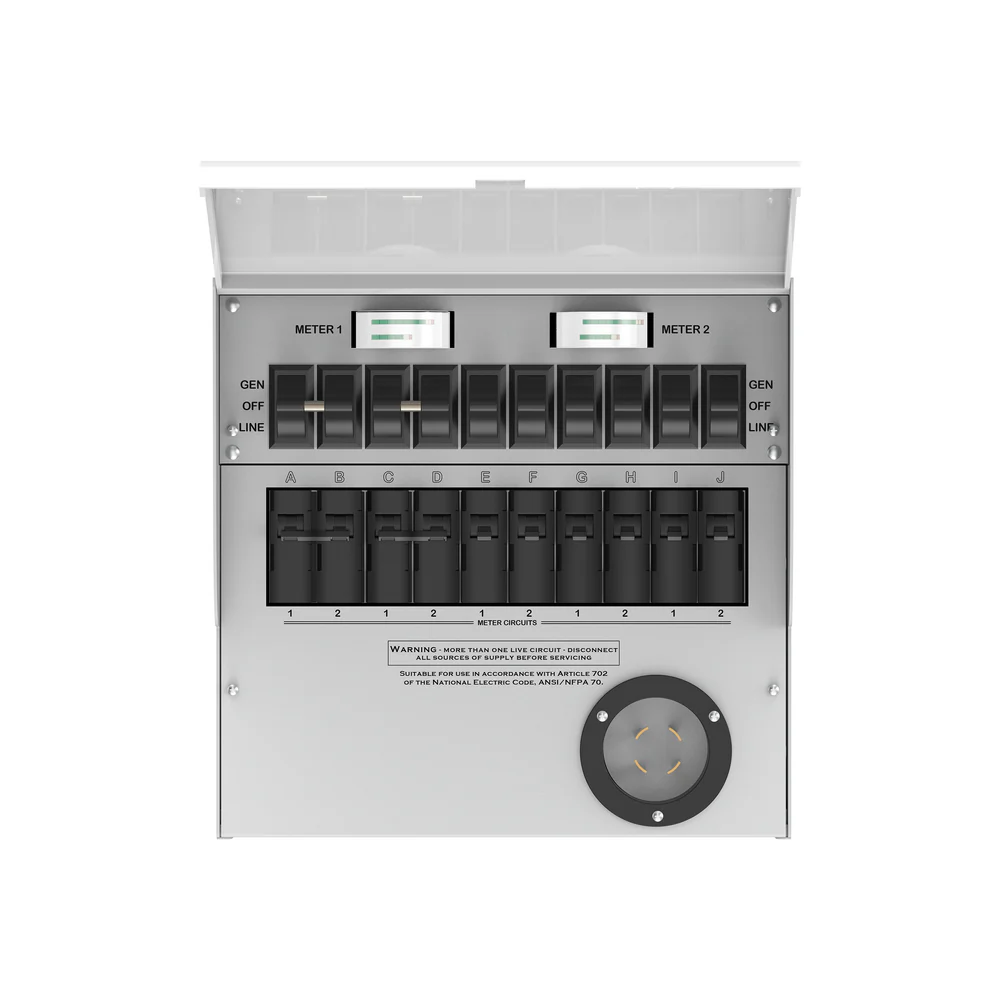
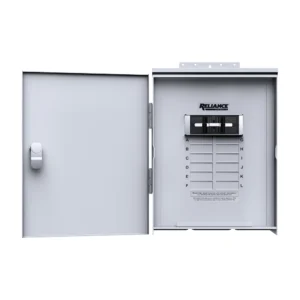
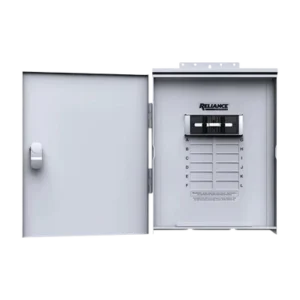
The AC300 Home Integration Kit solves that problem permanently. It provides the Reliance Controls transfer sub-panel, 30A outlet box, and the specific TT-30 to L14-30 cabling needed to hardwire the AC300 into your home’s electrical panel. When the grid drops, one flip of a switch and a plug transfer, and your selected home circuits chosen during installation run on battery power without you moving a single appliance.
The result: a $2,000+ AC300 + B300 system that behaves like a proper whole-home backup solution instead of a wheeled generator.
The AC300 is BLUETTI’s modular platform worth understanding
Unlike BLUETTI’s self-contained systems (EP500 Pro has a built-in 5,100 Wh battery; Apex 300 has 2,764 Wh built-in), the AC300 is an inverter unit with no internal battery it relies on external B300 modules (3,072 Wh each) for storage. That architecture matters for two reasons:
- You choose your capacity — start with one B300 for a 3 kWh system, expand to two for 6 kWh, or scale to four B300s for over 12 kWh per AC300 unit
- The output cabling is specific to AC300’s ports — the AC300 uses a TT-30 output socket (30A/125V RV-style plug), which is why this kit includes a TT-30 to L14-30 conversion cable rather than a direct L14-30 output
If you own an AC300, this is the correct home integration kit. If you own an AC500 (modular, needs B300S batteries) or an EP500 Pro (self-contained), those have their own separate kits with different cabling.
Choose the right variant single-unit or split-phase
The biggest decision on this page.
| Required AC300 units | 1 | 2 |
| Required B300 batteries | 1–4 (typically 2 for meaningful backup) | 4 minimum (per BLUETTI’s current spec) |
| Output configuration | 120V single-phase | 120V + 240V split-phase |
| Max continuous output | 3,000 W | 6,000 W |
| Typical backup capacity | 6,144 Wh (with 2 B300) | 24,576 Wh (with 4 B300) |
| Typical outage runtime (700 W avg load) | ~8 hours | ~30+ hours |
| Best for | Essentials-only backup, smaller loads | Whole-home backup with 240V appliances |
Pick the 120V single-unit kit if:
- You already own one AC300 and don’t plan a second
- Your backed-up loads are 120V only — no well pumps, no electric range, no 240V heat pumps
- You want essentials coverage: fridge, freezer, key lighting, comms, home office
Pick the 120V/240V split-phase kit if:
- You have (or plan) two AC300 units and four or more B300 batteries
- You need 240V for well pumps, electric range, dryer, or heat pump backup
- You want serious multi-day outage coverage 24 kWh runs a well-managed household for 30+ hours easily
- You’re building whole-home backup rather than essentials-only
The split-phase kit requires two AC300s connected via the included communication cable to synthesise split-phase 240V output. A single AC300 cannot deliver 240V regardless of battery count.
How split-phase works with two AC300s
In North America, most homes run 240V split-phase — two 120V “hot” legs (L1 and L2) combining to 240V for larger appliances. A single 120V power source can’t drive a 240V load like a well pump.
Two AC300 units, connected through this kit’s communication cable, act as those two 120V legs. One AC300 provides L1, the other provides L2, and together they synthesise proper 240V split-phase output that your existing home wiring accepts natively. From the electrical panel’s perspective, the paired AC300s behave as a single 6 kW split-phase generator.
The communication cable is essential without it, two AC300s are just two independent 120V sources with no phase alignment.
What’s inside each kit
AC300 Home Integration Kit (120V Single Unit):
- 1 × Reliance Sub-Panel with 30A Inlet Box
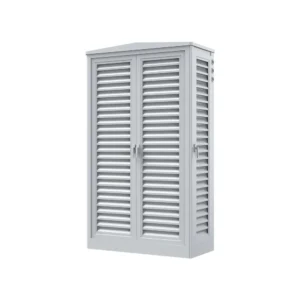
- 1 × Reliance 30A Outlet Box (exterior-mount inlet)
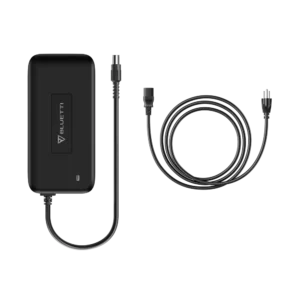
- 1 × 30A AC Charging Cable (L14-30 to AC300 input) — recharges the AC300 through the sub-panel
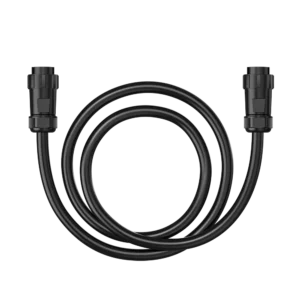
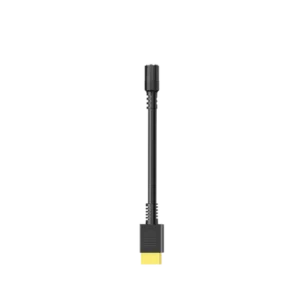
- 1 × TT-30 to L14-30 Cable — connects AC300’s TT-30 output to the outlet box
AC300 Home Integration Kit (120V/240V Split-Phase):
- 1 × Reliance Sub-Panel with 30A Inlet Box
- 1 × Reliance 30A Outlet Box (exterior-mount inlet)
- 1 × 30A Split-Phase AC Charging Cable
- 1 × Dual TT-30P to L14-30C Cable (connects both AC300s’ TT-30 output ports to the transfer switch)
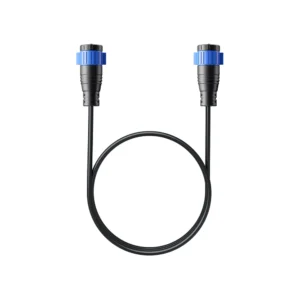
- 1 × Communication Cable (synchronises the two AC300s into split-phase)
Both variants include Reliance mounting hardware and installation documentation.
Why TT-30 and L14-30 a plain explanation
If the cable names look like alphabet soup, here’s what they mean:
- TT-30 — the 3-prong RV-style plug on the AC300’s output side. 30A, 120V single-phase. Same plug you’d find on any RV shore-power pedestal
- L14-30 — the 4-prong twist-lock generator-style plug on the sub-panel side. 30A, 125/250V, capable of carrying split-phase for the dual-AC300 configuration
- L14-30C — the female connector version of L14-30, used on the split-phase cable to connect two AC300s
The AC300 uses TT-30 output. The Reliance sub-panel uses L14-30 input. The cable in this kit converts between them — that’s the whole story.
What’s not included
The kit provides the interface hardware only. Everything else is separate.
- BLUETTI AC300 unit(s) — one for 120V variant, two for split-phase variant. Typically $1,800–$2,300 each
- BLUETTI B300 battery module(s) — 1–4 batteries per AC300 depending on desired capacity. Typically $1,200 each
- Circuit breakers for the sub-panel — your electrician will spec based on which circuits you’re backing up
- Any solar panels or PV input hardware — if you want solar recharging
- Wire runs from the sub-panel to your home’s main panel — installer-supplied
Installer labour is not optional. North American electrical code requires a licensed electrician for hardwired connections to your home panel. Budget $800–$2,500 for electrician labour on the 120V install, or $1,500–$3,500 for split-phase configuration.
How the system actually works
Normal grid operation:
- Utility power feeds your main panel as usual
- The Reliance sub-panel is in “LINE” mode — backed-up circuits run on utility
- Your AC300 sits idle, possibly on charge from mains
During a grid outage:
- Wheel the AC300 to (or connect it in place at) the exterior outlet box
- Plug the TT-30 to L14-30 cable between the AC300 TT-30 output and the outlet box
- Turn on the AC300 — split-phase mode auto-detects via the communication cable in the dual-unit variant
- At the sub-panel, flip each backed-up circuit’s transfer switch from “LINE” to “GENERATOR”
- Selected circuits run on AC300 battery power
When utility returns:
- Flip the transfer switches back to “LINE”
- Unplug the AC300
- Recharge the AC300 from mains (or solar) for the next outage
The Reliance transfer switches are mechanically interlocked — they physically prevent the AC300’s output from backfeeding into the utility grid, which is both a safety requirement and a legal one.
Regional compatibility North American only
This kit works only with the 100–120V US-plug version of the AC300 and only for North American 120V/240V split-phase electrical systems.
Do not buy this kit if you’re in:
- New Zealand or Australia (230V/50Hz single-phase)
- UK or Europe (230V/50Hz, Type G/F plugs)
- UAE, Middle East, most of Asia (220–230V single-phase)
The Reliance sub-panel, TT-30, and L14-30 plug standards are US and Canadian specifications. For non-NA markets, contact your regional BLUETTI supplier for the equivalent code-compliant integration kit designed for your electrical system.
Where each variant makes sense
120V Single Unit — good fit for:
- Homeowners with a single AC300 setup wanting essentials backup
- Renters with landlord permission to install a sub-panel
- 120V-only backup priorities (fridge, comms, lights, office)
- Anyone building modular backup and starting with the single-unit configuration
120V/240V Split-Phase — good fit for:
- Rural properties with well pumps or septic pumps (240V loads)
- Homes with electric ranges, dryers, or 240V heat pumps
- Storm-prone areas where multi-day outages are realistic
- Serious whole-home backup ambitions where a 12–24 kWh battery bank makes sense
How this compares to other BLUETTI home integration kits
BLUETTI ships home integration kits for several of its power stations. Each is specific to its platform’s output rating and connector.
Kit
Platform
Connector
Max Output
| Apex 300 Home Integration Kit | Apex 300 | P050A locking | Depends on Hub A1 |
| AC500 Home Integration Kit | AC500 + B300S | NEMA 14-50 (50A) | 10,000 W |
| EP500 Pro Home Integration Kit | EP500 Pro | L14-30 twist-lock (30A) | 6,000 W |
| AC300 Home Integration Kit (this SKU) | AC300 + B300 | TT-30 to L14-30 (30A) | 6,000 W |
Match the kit to the power station you own or are buying. Cross-compatibility across BLUETTI platforms is not supported the connectors and control protocols differ.

 No products in the cart.
Reviews
There are no reviews yet.